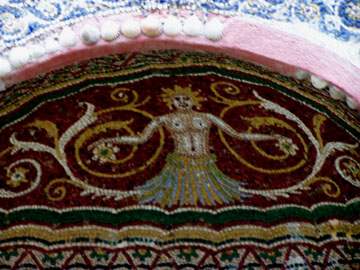
MERMAIDS IN OUR OCEANS:
NOTE TO READER:THIS WEBSITE IS NOT RESPONSIBLE FOR INFORMATION YOU ATTAIN DURING YOUR RESEARCH INTO THIS WORLD, SOME OF THIS THINGS ARE VERY REAL AND SHOULD NOT BE PLAYED WITH,READ AT YOUR OWN DISCRETION
 folklore nowadays has a funny way to dismiss certain facts about realities sorrouding our constant lives. Walt Disneys Empire paved the way for the Illuminati to program people watching things such as little mermaid for example.if like me you are not a devoted christian you are susceptible to attacks by these beings.
Mermaids, who are also called mermaid spirits are from a sect of Demonic spirits (fallen angels) who resides in water and are also are very REAL; nevertheless, it is because of the ignorance of the truth of Satan's kingdom and operations they are believed to be fairy tales.
 EXCERPT FROM SATANIST FRIEND:The reason why science cannot prove their existence is because “we cannot prove the spiritual with the natural, unless the supernatural manifest in the physical to leave a physical imprint!” I have had an opportunity to spend time with a woman who is an ex-Satanist, who held the highest position in the kingdom of Satanism. She was a High Priestess, a General and the Regional bride of Satan in the Caribbean. She is one of those who have escaped the powers of Satanism and live to tell the tale of these underwater creatures and hidden works of the Devil, of which she is a witness and have been a part of for years.

 This will be clearly explained with evidence in this section. For thousands of years, we have been told tales of beautiful and dangerous creatures which inhabit the waters of the world. The question is; are they real or are they not and what do we really know about them? Mermaids are not what Walt Disney or Hollywood presents them to be. In reality, mermaids are spirits of Demons, spiritual creatures of the kingdom of Satan. Also, certain sect of Satanists who through the powers of Demons spirits would take up the form of these evil creatures and travels within the marine body in the form of half human and half fish according to the testimonies of many former marine workers of the Occult. A great deal of information on water Demons or mermaids can be fond in Witch's Guide To Faery Folk: Reclaiming Our Working Relationship with Invisible Helpers (Llewellyn's New Age Series)
FACTS ON MERMAIDS BODY FOUND
Here is this fact to clear your mind. There have been stories on the media where the carcass of what is said to be a dead mermaid was washed up on a beach at Chennai after a tsunami, and also, the body of what looked like a mermaid which was found on Florida’s beach. ALL of these physical findings are a hoax.
These dead findings are not real Mermaids because mermaids are Demons in the form of half human-like top and the lower of fish. Demons are immortal and cannot die. Also, they cannot be humans who have been transformed into these creatures because a human can only transform to a mermaid by Demons but if the person dies, the Demon goes away and the person’s body will regain its normal human shape. Although there may be a hoax behind these but there is a reality of existence behind the theory of hoaxes. Marine spirits are dangerous, though some may appear harmless but a Demon will always be a demon, evil and wicked.
 We are going to look at the Demons who reside beneath the waters. These Demon spirits are called “Aquarius spirits” or “Marine spirits”. These Demons are contacted only through witchcraft as to receive supernatural powers. Their Marine kingdom (WHICH IS SPIRITUAL) is established under the ocean and the Headquarters of Marine kingdom of Satan is said to be located beneath India’s Sea. The “Queen of India’s sea” is the head of Marine kingdom, while the “Queen of the Coast” is next in command and resides within the Atlantic Ocean. It is said that both are also among the fallen angels
 A brief introduction on the Marine kingdom of the Satan which resides beneath the sea: To expound on the Marine kingdom of Satan: This is a highly organized and strategized place where high technological equipments are used by high ranking Satanists who are psychiatrists and scientists, who work in labs tirelessly to design beautiful but seductive things. The things that are designed in that spirit world are said to be latest weapons, perfumes, assorted types of cosmetics, flashy cars, different designs of electronics, etc. Many perfumes to lure men and women, underwear and sexy clothing to seduce and distract men are also made there. These things are use on earth to supply people who have signed a contract with Satan – sale and prosperity for a soul in return. These things are also given to most of the workers of the Occult for the sole purpose to distract people from Jesus Christ.
 This is run by the Queen of the Coast herself. Many of the high technological researches and the invention of many play station and other games are designed to take children away from the passion of ever wanting to become a Christian and to carry them into a vagabond-like character of not wanting to go to school anymore but live in play station studios.

Over the centuries, documents have been made by those who have had encounter with these creatures especially in the Eastern countries and few places in the Caribbean. In Africa where witchcraft is rampant many manifestation of these creatures were seen and is still being seen by those who are bewitched. It is also believed and known among the worshipers of these water spirits that Saturday nights is the time when mermaids in rivers and seas all over the world are most likely to be seen.
As the centuries went by it have been rumored that there has been a great deal of sightings of these creatures in the sea and on the shore, which resembles half fish and half of what looks like the resemblance of a human. Not only these creatures was seen, but also it was said that only few who them would escape immediate death by the powers of these creatures and live to tell the tail. They would drown sailors, cause shipwreck and storms. These paintings were made after the story of sailors who encountered these spirit beings at sea.

Strong physical evidence have not been seen and therefore scientists and philosophers have dismissed the stories and theory as hoax, nevertheless the great account of encounters from all over the world seems to be similar. All the water spirits live in water, most have fish tale, vicious, caries a comb and causes death. Why aren’t people seeing the water spirits as common today as it was years ago? They have been exposed and therefore seek to remain to people as a myth. Also because of the prayer of the saints of God their manifestation are not commonly seen, but is still present to those of the Occult. These spirits are call “Nymph” or “Water Nymph” from which we have a sect of spirits called “Naiads” (fresh water spirits) and “oceonide” (ocean spirits)
 Nymphs:
Among all the spirits which presides among the corners of the universe, there is a sect called Nymph.
Nymphs are “spirits” and are a member of the class of mythological entities who manifest in the form of human females, and are typically associated with particular locations. There are different types of Nymphs, but there is a set of spirits that I want to discuss here and they are from a class called “Naiads” and “Oceonide”
 Naiads are spirits and are called fresh water Nymphs (spirits) or Aquarius spirits and reside in bodies of fresh water like rivers, streams, brooks, springs, fountains, lakes, ponds, wells, and marshes. These spirits are divided into various subclasses: Crinaeae resides in fountains, Pegaeae resides in springs, Eleionomae resides in marshes, Potameides resides in rivers, and Limnades or Limnatides in lakes. It is also said that is associated with rain water, the possesses the and resides in any water, usually salty.

Oceanids are most common to human, for they cause more disaster than the naiads who resides in fresh water. The sea is bigger than fresh water bodies and is the main passage for ships and other water vessels.
The waters over which Naiads presides are thought to be endowed with inspirational, healing, and/or prophetic powers. Thus the Naiads were called water gods and were frequently worshipped by the ancient Greeks. The genealogy of the Naiads was determined by the geographic region and literary source. Naiads were either daughters of Zeus, daughters of various river gods, or simply part of the vast family of the Titan Oceanus or Poseidon (Neptune). Now, as I said before, these Greek gods are not only Greek myths, but are real spirits or Demon princes who take up residential areas to allocate themselves. As much as it is myths to the ignorant persons because of lack of substantial evident that these spirits really exists, yet they are real through experiences by those who are involve in the Occult.


 MAMI WATA (Mermaid of Africa)
All mermaid spirit are called mother of the water or ocean. According to the African culture of spiritism and witchcraft, a Mermaid spirit resides within the waters of Africa whom they called “Mami Wata,” which is in the corrected English language (Mommy Water or Water Mommy, which is just another way of saying Mommy or Mother of the Water). Mami Wata is a pantheon of water spirits or deities, venerated in West, Central, and Southern Africa, and in the African diaspora in the Caribbean and parts of North and South America.
 She is one of the most popular-and powerful-African water spirits or mermaid and is named “Mamba Muntu” which is her personal African name.
 Some devotees of the Igbo people of West Africa, and the many who have encountered Mami Wata have reported to anthropologists that she is a mermaid spirit with the upper part of her body as human and her lower parts as a fish or serpent.
 It is said that she possesses inhuman beauty, unnaturally long hair of three different textures which ranges from straight, curly to kinky, and either black or blonde, and is combed straight back, and a high complexion that’s beyond normal. She is described as having a large snake (which is a symbol of divination or divinity in many African cultures) around her neck, which wraps itself around her, laying its head between her nude breasts.
 In one report it is said that Anthropologist, Mary Bastian (1987-88) did a field research in Nigeria on the Onitsha Market System. During this research, it was reported to her that Mami Wata is female, and that she displays her unimaginable wealth of jewelry such as combs, mirrors, and watches, wristwatch, which represent foreign wealth and would blind those who view it.
 She is seen with a mirror and a comb and would just sit there seducing men as they past by on the shore. Those who are seduced by her or the other spirits are killed immediately under the water and some would come back as her mediums with special powers and would be use for her evil purpose. She also has other forms, can manifest as a man, or fully human.
 Hundreds of years ago, numerous water spirits were said to be living in West Africa and their manifestation to the public were eminent. These African water spirits were most time encountered as snakes or Crocodile, which was not as intriguing, as we know snakes are associated with demons, but were also encountered as half fish and half-human like.
 It is also said that this water spirit has a temper and will drown people who does not obey her, and she will cause confusion, sickness etc. Mami Wata has many followers and gives visions to those she calls to serve her as mediums.
In different African religious systems, such as the Voodoo which is highly practiced in the southern parts of Togo and Benin, and Southern Ghana, where there exists an actual consecrated body of pagan priests and priestesses of this water spirit. Today Mami Wata worship is a wide spread tradition in West Africa, the Caribbean and in America.
 The Mermaid LaSirèn (Mermaid of Haiti)
This mermaid Demoness is also said to be a powerful water spirit popular in the Caribbean Island of Haiti.
In reality, LaSirèn came from the English word Siren, which is a sect of spirits that is said to be half bird and woman and manifest around water as mermaid and sings very beautifully as to attract humans and destroy sailors.
 These Sirenes were said to be manifesting in many areas around the world and was encountered by many. Nevertheless, the name LaSirèn was given specifically to the goddess water spirit of Haiti who is said to be a Mermaid and Queen of the sea.
 I believe that giving the name LaSirene to this mermaid spirit is a misunderstanding, for many have mistaken Sirenes for actual mermaid because they are similar in beauty and melodies. In Haiti, Voodoo is one of the most popular religions there. Water spirits are said to be manifesting to the voodoo people there as they seeks the help of these spirits from under the water.
 Followers of LaSirèn say she takes them below the water to her world for 3 days, 3 weeks, months or even years, and when they return to land, they would return with new powers, yea, it is said that some women become Voodoo priestesses this way.
 She is an elegant, beautiful woman who is a temptress. It is said by the Haitians that LaSirene has the ability to hypnotize people with her beauty. Many say that she is thus deceptive. She rules over dreams and can often be seen there.
 The LaSiren or water goddess they claim to worship is thought by some Haitians to be the Mami Wata Mamba Muntu that they knew from their African root worship but with the name LaSiren. Remember that the name “mami wata” or “mother of the water” though given to the African Mermaid Mamba Muntu as a personal name, it is a name for all spirits that are mothers of the waters or mermaids.
 This water spirit worshipped in Haiti is a Mami Wata and is given the name LaSiren but is not the same spirit worshipped in Africa who in African called Mamba Muntu. Though many may tend to say that Mami Wata is worshipped through out the world, but it is a deception on the part of the worshipers. The concept of the African descendant is this:
 they thought they are worshiping the Mami Wata that they heard about form back home in Africa, but is actually worshiping other water spirit and not the African one. These spirits take credit for themselves knowing mami wata does not mean a specific spirit, but water spirits in general.
 This is no mistake why they are given a personal name in various countries. This may seems strange and folklore but these are information from the experiences of those who have been in contact with the spirit world.


According as it is said about the locations, it was said that cliffs and rocks surrounded it. Sailors who sailed by were killed through shipwreck on the rocky coast by the Sirens' as they peeped to gave at the location of the enchanting music and voices to. These spirits lured mariners yet they were not water spirit or Naiads in origin.
NOTE TO READER:THIS WEBSITE IS NOT RESPONSIBLE FOR INFORMATION YOU ATTAIN DURING YOUR RESEARCH INTO THIS WORLD, SOME OF THIS THINGS ARE VERY REAL AND SHOULD NOT BE PLAYED WITH,READ AT YOUR OWN DISCRETION
Mermaids, who are also called mermaid spirits are from a sect of Demonic spirits (fallen angels) who resides in water and are also are very REAL; nevertheless, it is because of the ignorance of the truth of Satan's kingdom and operations they are believed to be fairy tales.
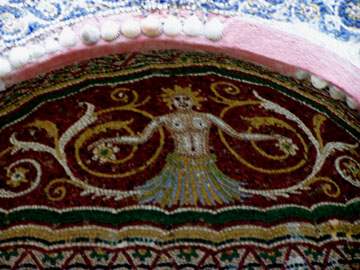 This will be clearly explained with evidence in this section. For thousands of years, we have been told tales of beautiful and dangerous creatures which inhabit the waters of the world. The question is; are they real or are they not and what do we really know about them? Mermaids are not what Walt Disney or Hollywood presents them to be. In reality, mermaids are spirits of Demons, spiritual creatures of the kingdom of Satan. Also, certain sect of Satanists who through the powers of Demons spirits would take up the form of these evil creatures and travels within the marine body in the form of half human and half fish according to the testimonies of many former marine workers of the Occult. A great deal of information on water Demons or mermaids can be fond in Witch's Guide To Faery Folk: Reclaiming Our Working Relationship with Invisible Helpers (Llewellyn's New Age Series)
FACTS ON MERMAIDS BODY FOUND
Here is this fact to clear your mind. There have been stories on the media where the carcass of what is said to be a dead mermaid was washed up on a beach at Chennai after a tsunami, and also, the body of what looked like a mermaid which was found on Florida’s beach. ALL of these physical findings are a hoax.
These dead findings are not real Mermaids because mermaids are Demons in the form of half human-like top and the lower of fish. Demons are immortal and cannot die. Also, they cannot be humans who have been transformed into these creatures because a human can only transform to a mermaid by Demons but if the person dies, the Demon goes away and the person’s body will regain its normal human shape. Although there may be a hoax behind these but there is a reality of existence behind the theory of hoaxes. Marine spirits are dangerous, though some may appear harmless but a Demon will always be a demon, evil and wicked.


Over the centuries, documents have been made by those who have had encounter with these creatures especially in the Eastern countries and few places in the Caribbean. In Africa where witchcraft is rampant many manifestation of these creatures were seen and is still being seen by those who are bewitched. It is also believed and known among the worshipers of these water spirits that Saturday nights is the time when mermaids in rivers and seas all over the world are most likely to be seen.
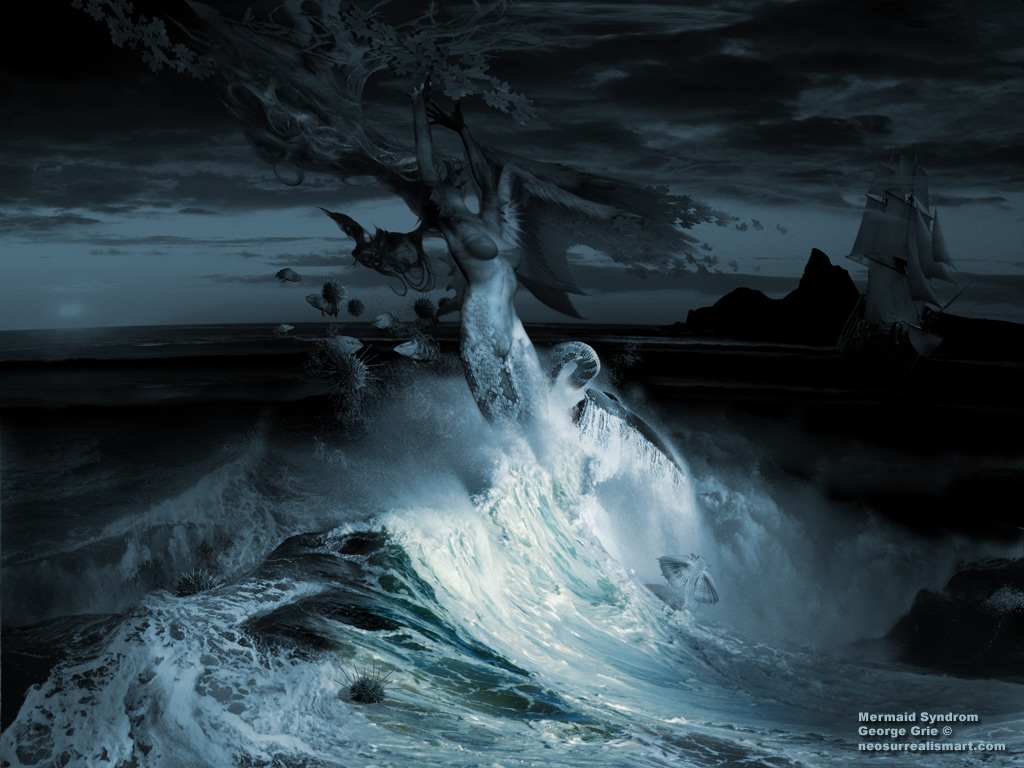
As the centuries went by it have been rumored that there has been a great deal of sightings of these creatures in the sea and on the shore, which resembles half fish and half of what looks like the resemblance of a human. Not only these creatures was seen, but also it was said that only few who them would escape immediate death by the powers of these creatures and live to tell the tail. They would drown sailors, cause shipwreck and storms. These paintings were made after the story of sailors who encountered these spirit beings at sea.

Strong physical evidence have not been seen and therefore scientists and philosophers have dismissed the stories and theory as hoax, nevertheless the great account of encounters from all over the world seems to be similar. All the water spirits live in water, most have fish tale, vicious, caries a comb and causes death. Why aren’t people seeing the water spirits as common today as it was years ago? They have been exposed and therefore seek to remain to people as a myth. Also because of the prayer of the saints of God their manifestation are not commonly seen, but is still present to those of the Occult. These spirits are call “Nymph” or “Water Nymph” from which we have a sect of spirits called “Naiads” (fresh water spirits) and “oceonide” (ocean spirits)
Among all the spirits which presides among the corners of the universe, there is a sect called Nymph.
Nymphs are “spirits” and are a member of the class of mythological entities who manifest in the form of human females, and are typically associated with particular locations. There are different types of Nymphs, but there is a set of spirits that I want to discuss here and they are from a class called “Naiads” and “Oceonide”
Oceanids are most common to human, for they cause more disaster than the naiads who resides in fresh water. The sea is bigger than fresh water bodies and is the main passage for ships and other water vessels.
The waters over which Naiads presides are thought to be endowed with inspirational, healing, and/or prophetic powers. Thus the Naiads were called water gods and were frequently worshipped by the ancient Greeks. The genealogy of the Naiads was determined by the geographic region and literary source. Naiads were either daughters of Zeus, daughters of various river gods, or simply part of the vast family of the Titan Oceanus or Poseidon (Neptune). Now, as I said before, these Greek gods are not only Greek myths, but are real spirits or Demon princes who take up residential areas to allocate themselves. As much as it is myths to the ignorant persons because of lack of substantial evident that these spirits really exists, yet they are real through experiences by those who are involve in the Occult.


All mermaid spirit are called mother of the water or ocean. According to the African culture of spiritism and witchcraft, a Mermaid spirit resides within the waters of Africa whom they called “Mami Wata,” which is in the corrected English language (Mommy Water or Water Mommy, which is just another way of saying Mommy or Mother of the Water). Mami Wata is a pantheon of water spirits or deities, venerated in West, Central, and Southern Africa, and in the African diaspora in the Caribbean and parts of North and South America.



In different African religious systems, such as the Voodoo which is highly practiced in the southern parts of Togo and Benin, and Southern Ghana, where there exists an actual consecrated body of pagan priests and priestesses of this water spirit. Today Mami Wata worship is a wide spread tradition in West Africa, the Caribbean and in America.
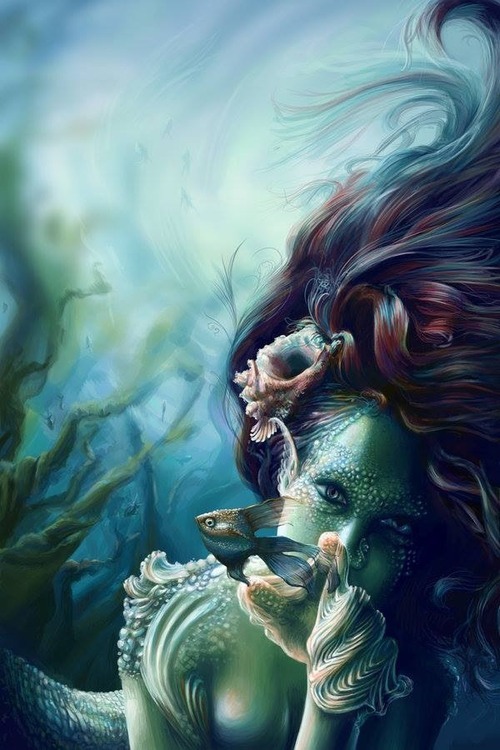
This mermaid Demoness is also said to be a powerful water spirit popular in the Caribbean Island of Haiti.
In reality, LaSirèn came from the English word Siren, which is a sect of spirits that is said to be half bird and woman and manifest around water as mermaid and sings very beautifully as to attract humans and destroy sailors.


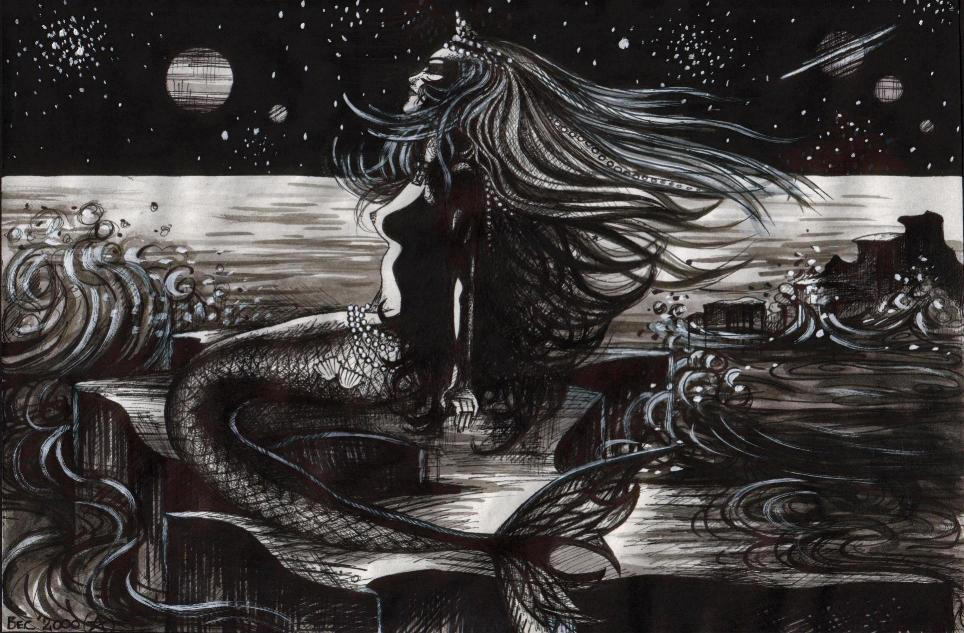


The story of the Little Mermaid is believed to be a myth or just a story, but it came from a background of reality. It is no co-incidence why this Olympian god Poseidon or Neptune (Roman) [a Demon Prince] who is said to be the “sea-god” is a Mermaid (Merman). This Little Mermaid cartoon is from a Roman and Greek paganic origin honoring the Olympian gods in different ways and forms. As much as Neptune is said to be a sea god (Demon prince) there are NO spirit that are real gods and goddesses in origin;

for there is ONE God who is the LORD of Host, Yahweh(GOD), who is the only Living God. Isaiah 44:6, “Thus saith the LORD the King of Israel, and his redeemer the LORD of hosts; I am the first, and I am the last; and beside me there is no God.” Vs.8 “ye are even my witnesses. Is there a God beside me? yea, there is no God; I know not any.”
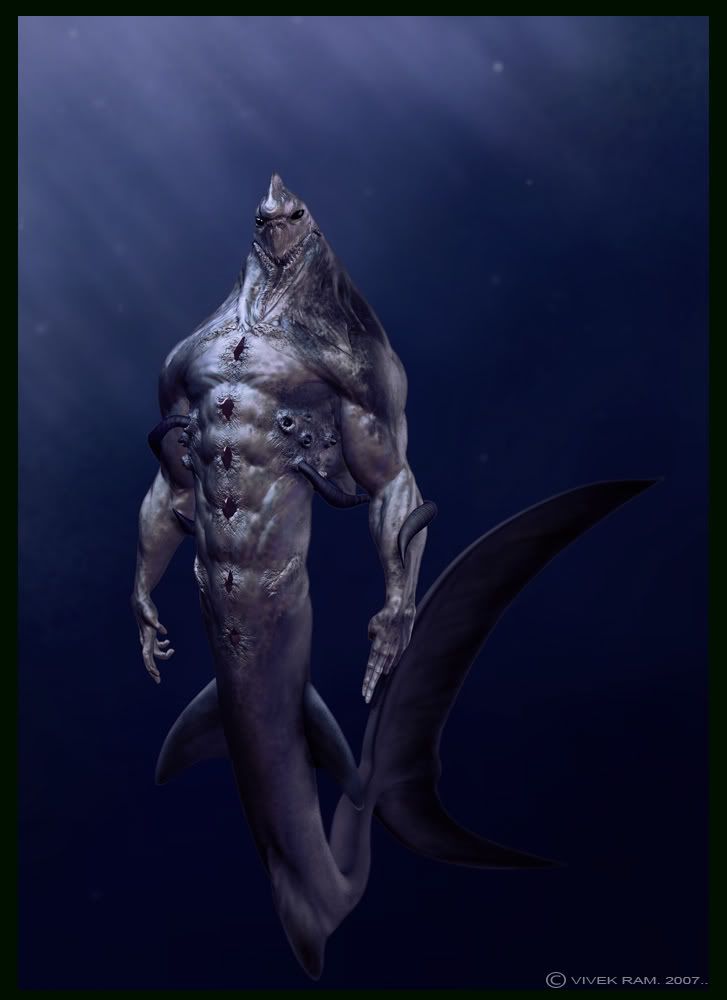
All gods apart from God are either false gods (Idols) or Demons who is posing as gods. Therefore, Ariel the Little Mermaid who is the daughter of the Sea god or Sea Demon Neptune would then be a goddess or Demoness. When we take pleasure in movies of this little mermaid and her father Neptune the Sea Demon or any other mermaid, especially those who are formed after one of the Pagan gods, we are opening our lives to rebellion against God. We are not to take pleasure and entertainment by any paganic thing
Neptune (Poseidon) the Mermaid carries an enchanted trident, and like most sea gods, have the power to transform his shape, and often do so in order to complete a seduction. Seduction is of the Devil which he used from the beginning. He did it to get the angels of God to follow him and to get Eve to fall for his lies.
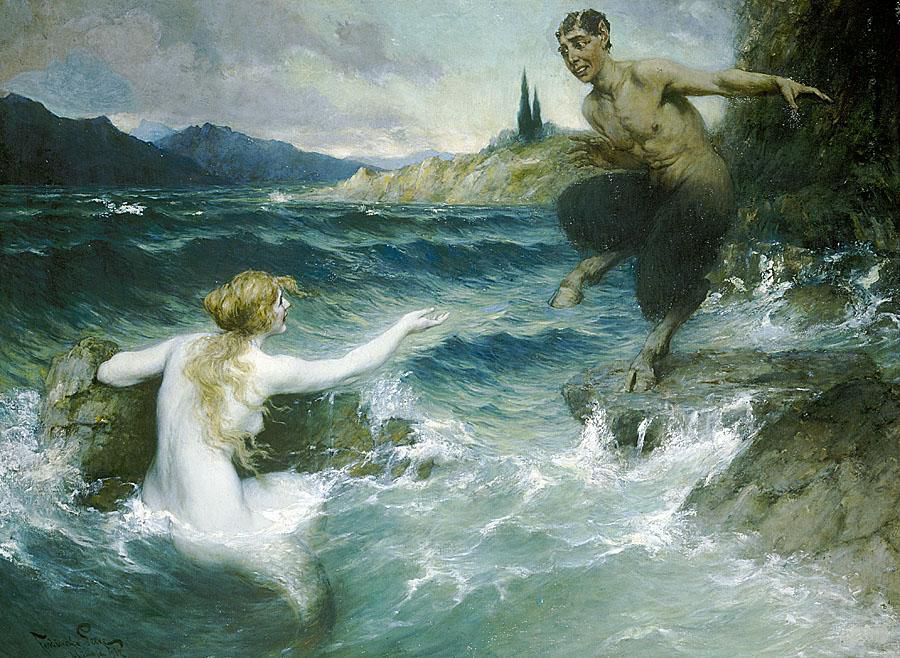
SIRENS
Here, we will look at a set of spirits, which are called “Sirens”. Sirens are also spirits that is said to be creatures like birds with a woman’s head who also resides over water but are not water spirits. These spirits are very dangerous and have throughout the centuries said to have been a nightmare to sailors especially insouthwestern coast of Italy. These spirits are skillful in singing and usually sing to lure sailors and other passing by as to do harm.
These are most of the times seen as women with tale as a fish, combing their hair either on a rock, seashore or in the water. These are not mermaids. It as also reported that there were three dangerous bird-women, portrayed as seductresses, who lived on an island called Sirenum scopuli.
(In the Greek mythology, the Sirenum scopuli were three small rocky islands where the Sirens lived and lured sailors to their deaths. According to the Greek writer, they were between Aeaea and the rock of Scylla which is named after (a legendary sea monster) in the Tyrrhenian Sea, off the coast of southwestern Italy. )

Similarly, it was also said in other versions of the myth that Anthemoessa (or Anthemusa) was the island home of the Sirens, who stayed on the island as they awaited passing ships. The names of these no longer exist.)
According as it is said about the locations, it was said that cliffs and rocks surrounded it. Sailors who sailed by were killed through shipwreck on the rocky coast by the Sirens' as they peeped to gave at the location of the enchanting music and voices to. These spirits lured mariners yet they were not water spirit or Naiads in origin.
THANKS TO ADIVINEENCOUNTER WEBSITE FOR PROVIDING EXPOSURE INFORMATION